What is Big Walk about?
If you are searching for what you do in Big Walk, the simplest answer is: explore with a group and talk through what you find. House House describes the game as a videogame about talking to friends, a big adventure and a place to hang out. The official FAQ also calls it a long-form cooperative game designed for a familiar group to return to over multiple sessions.
That description sets a different expectation from a solo action game with a fixed sequence of objectives. Your group is part of the experience. Players compare what they can see, decide what seems worth testing, and make progress by staying in conversation. The fun can come from solving something together, but it can also come from the detours and shared stories along the way.
This guide explains that broad rhythm without revealing a route solution. It does not claim to list every activity, puzzle, hidden object or ending. When you need a specific answer, use the matching route or puzzle page linked below; when you only need the next useful observation, stay with the spoiler-light steps on this page.
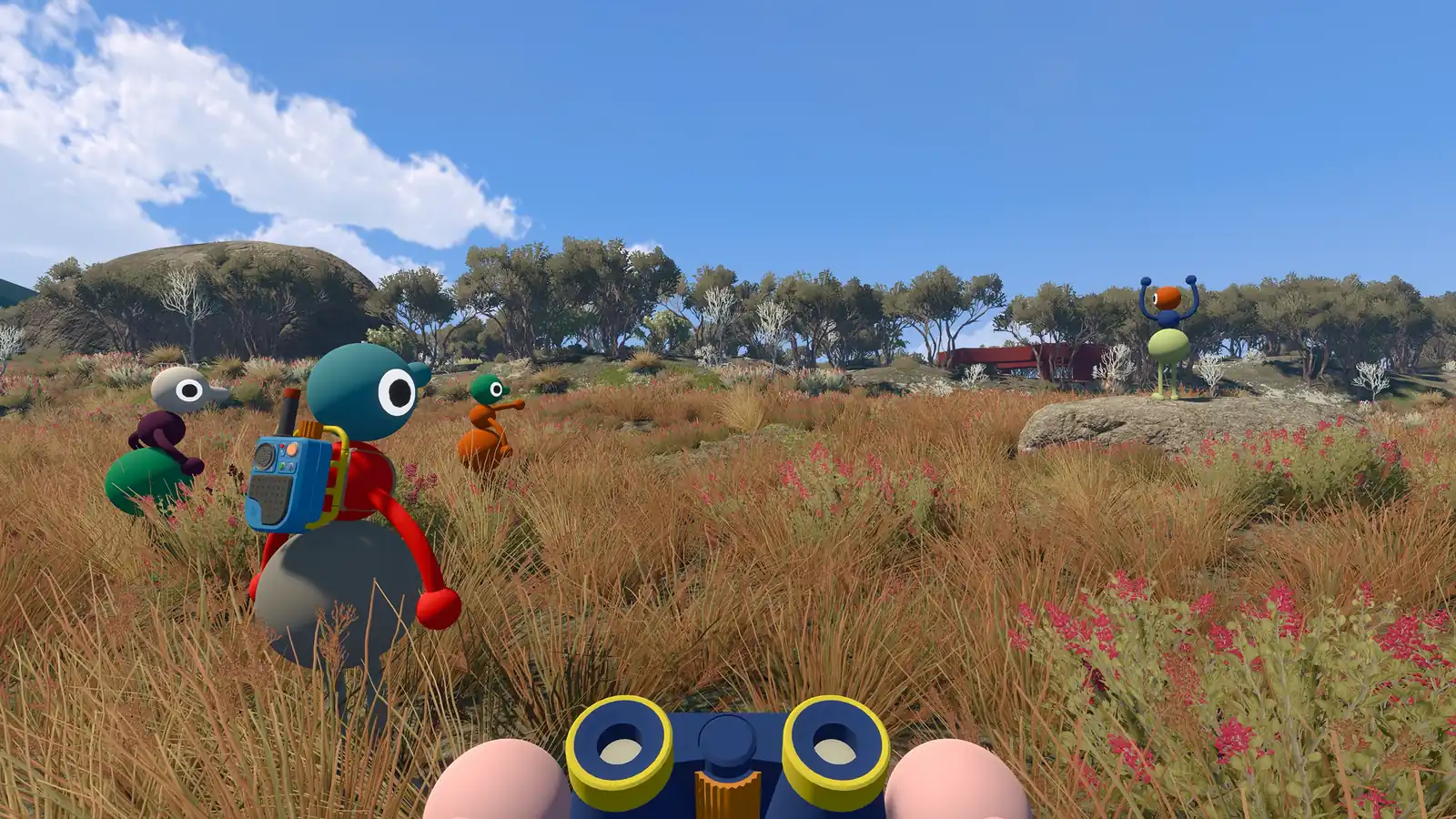
The Big Walk gameplay loop, in practical terms
The following sequence is an editorial way to describe a session, not a mandatory in-game quest order. A group may repeat a step or take a scenic detour.
| What the group does | A useful example | Why it helps |
|---|---|---|
| Explore together | Move through the same area and agree on a visible place everyone can recognize. | A shared reference makes it easier to describe where you are without relying on vague directions. |
| Say what you notice | One player mentions a landmark, sound, object or change in the scene; another checks whether they see the same thing. | Short observations are easier for the group to test than several unrelated guesses. |
| Try one idea | Choose one next action, watch what changes, then tell the group what happened. | A small test keeps a challenge understandable and helps the party learn from a wrong turn. |
| Regroup and decide | Pause at a known point and choose whether to continue, explore nearby or open a specific guide. | The party can keep moving at a shared pace instead of splitting into several separate searches. |
| Return for another session | If the group is done for the day, agree who is hosting next and name the last shared point. | The official FAQ describes Big Walk as a multi-session experience with the host keeping the save. |
Why communication is part of the gameplay
Talking is not just a convenience layered on top of Big Walk. The developer describes it as central to the game, and the official FAQ says the game is built around teamwork. That is why the group can get more from a simple callout such as I can see the station than from one player silently running ahead and returning with a conclusion nobody else can place.
The official FAQ recommends that players be physically separate and use the in-game voice chat. That is a developer recommendation about the intended experience, not a claim that every household must use a particular room arrangement. If your group is sharing a room or using another voice setup, agree on a way to avoid echo and make sure everyone can hear the same callouts.
A practical group habit is to distinguish an observation from an interpretation. There is a track beside the slope is something another player can check. This must be the route is a theory. Keeping the two separate makes it easier to change course when the next view does not support the first idea.
A spoiler-light plan for your first Big Walk session
Before starting, pick a group and a way to communicate. Then use these steps as optional coordination advice rather than a required route.
- Choose the host and group sizeThe host starts the session and chooses a 2-player, 3-player or 4+ player world option. The official FAQ says some parts of the world adapt to that choice. Decide who will host before everyone joins.
- Agree on how to talkThe official FAQ points players toward in-game voice chat and physical separation. Check that everyone can hear clearly, and settle on a short phrase for asking the group to pause.
- Use one shared referenceWhen the party is unsure, name the last place everyone recognizes. A fixed landmark or junction is more useful than go back a little when the camera or direction has changed.
- Try one observation at a timeLet one player describe what they see, then let the group confirm or question it. If you want a hint, open the relevant guide at its least-spoilery level instead of searching for a full solution immediately.
- End with a clear next stepBig Walk is designed for multiple sessions. Before the group stops, note who will host again and name one location or question to resume from. The host save is the continuity point described in the official FAQ.
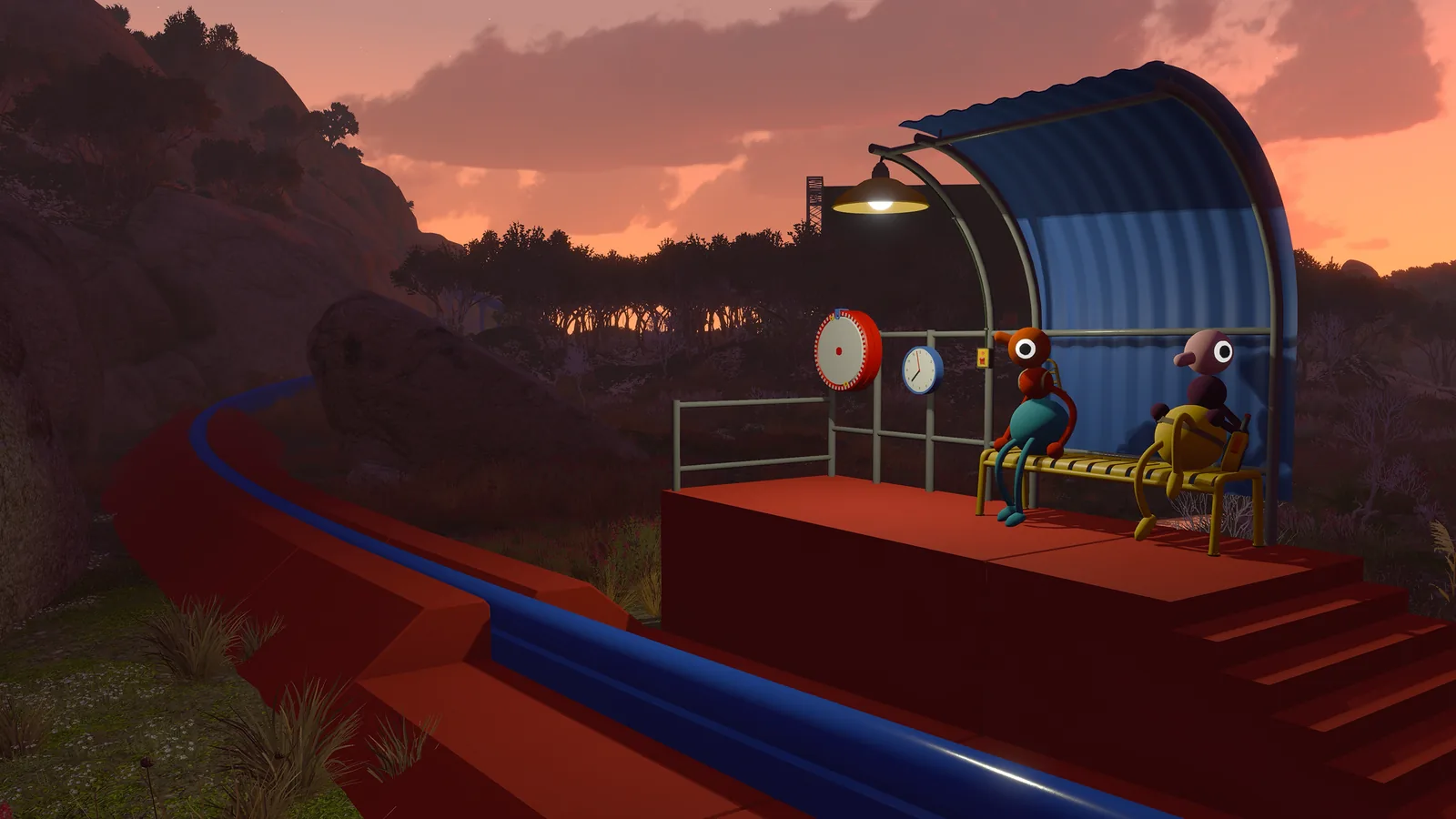
How the player count changes the group dynamic
The official player range is a fact; the suggested roles below are optional ways to keep a conversation clear.
| Group size | Official fact | Optional coordination idea |
|---|---|---|
| 2 players | Big Walk supports two or more players. The official FAQ describes smaller groups as a more focused co-op experience. | One player can describe the scene while the other checks the next idea; swap naturally when the task changes. |
| 3 players | The host can choose a 3-player version of the world, and some things adapt to the selected group option. | Try one observer, one person keeping the last shared point, and one person summarizing the next action. These are suggestions, not game roles. |
| 4 to 12 players | The official FAQ gives a maximum of 12 and describes larger groups as more chaotic. The host chooses the 4+ option rather than a separate setting for every exact count. | At a fork or confusing scene, ask one person to summarize what the group has confirmed before everyone moves. |
What is confirmed, and what this guide does not promise
Official statements and editorial suggestions are separated so you can tell game rules from group-planning advice.
| Topic | Verified source fact | Boundary |
|---|---|---|
| Co-op | The official FAQ says Big Walk is designed around teamwork and talking; two or more players can join, up to 12. | This page does not promise that any specific party size is objectively best. |
| Sessions | The official FAQ describes a long-form game for the same group across multiple sessions and says the host keeps the save. | No fixed universal completion time is stated here; see the playtime guide for session planning. |
| Solo play | The official FAQ says there is no single-player mode, though a player can start and explore a little alone. | A brief solo look is not the same as a supported solo playthrough. |
| Routes and challenges | The official site and Press Kit present Big Walk as a cooperative adventure; existing route and puzzle guides cover specific locations and hints. | This overview is not a complete walkthrough, map, collectible list or official activity checklist. |
What this overview is not
Not a full walkthrough
The guide avoids route-by-route solutions so a new group can decide how much help it wants. Open the 4166 Road, 1899 Cable Car or puzzle guide only when the current landmark calls for it.
Not a promise about exact playtime
The official FAQ describes a long-form adventure but does not give one completion time for every party. Use the existing playtime guide to plan around sessions rather than a guaranteed hour count.
Not a multiplayer setup manual
The official sources confirm crossplay and group play, while the existing crossplay page covers platforms, Join Code steps and troubleshooting in detail.
Common questions
Big Walk gameplay FAQ
Official sources checked
Statements about co-op, player count, sessions, solo play and communication come from the developer public pages. The session routine and group roles are editorial suggestions.