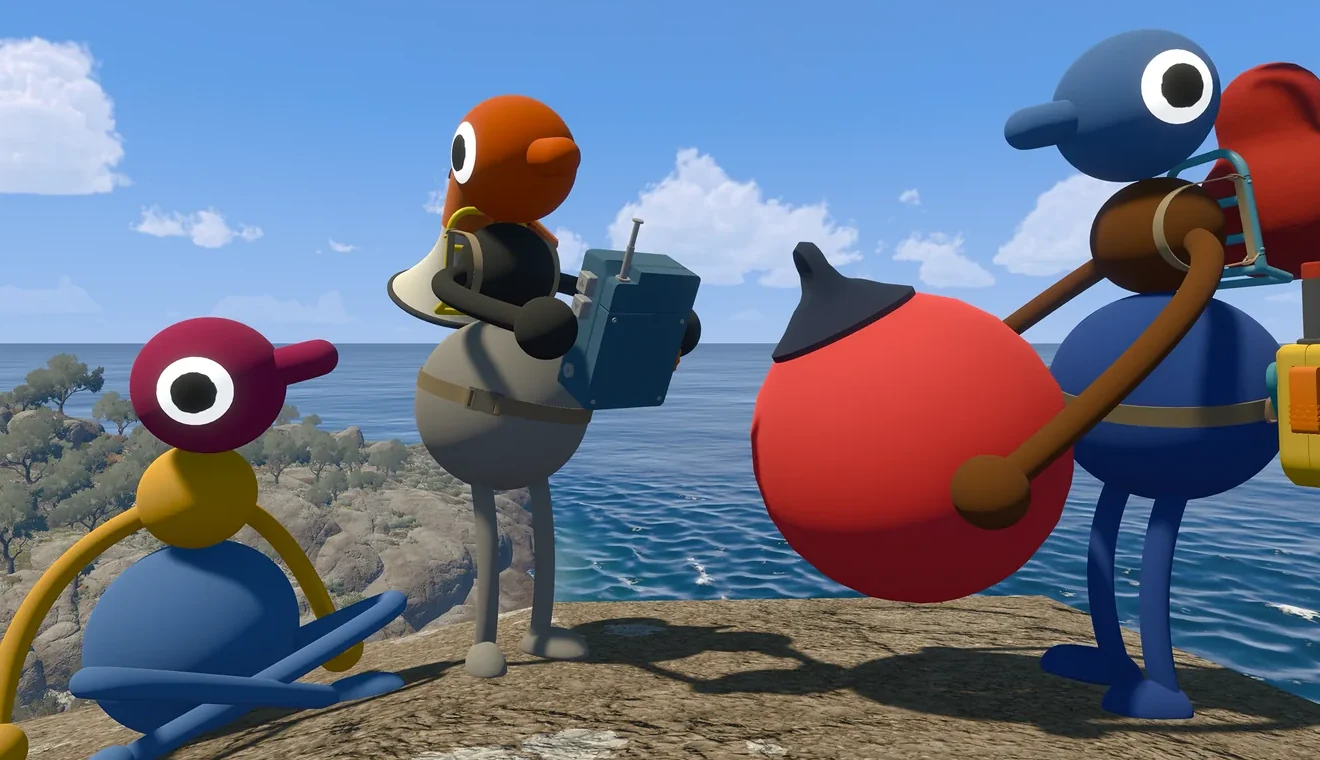
What the Big Walk puzzle search is really asking
Searches for Big Walk puzzles, all puzzles and puzzle solutions usually mix three different needs: a player may want to know what kind of challenge is ahead, a group may need a nudge without the complete answer, or a stuck party may want a route-specific solution. Treating all three as one giant walkthrough makes it too easy to spoil a first run.
The official Big Walk FAQ describes a long-form cooperative game built around talking, observing and moving through a world with challenges. It also explains that the host chooses a party-size version of the world and that some challenge situations can be skipped for accessibility. Those facts matter because the exact puzzle rhythm can change with party size, communication and challenge settings.
This page therefore uses a boundary: official pages support the game structure, player-count and challenge-setting facts; the puzzle categories, role suggestions and hint order are editorial organization. When a search phrase points to a precise 4166 Road or 1899 Cable Car moment, the route page is the better destination than a duplicated answer here.
If you are looking for a complete all-puzzles list, keep the version and spoiler risk in mind. The official sources checked for this update do not publish a stable master count, so this guide does not invent one. It gives a useful way to classify the next puzzle and tells you where the verified route notes begin.
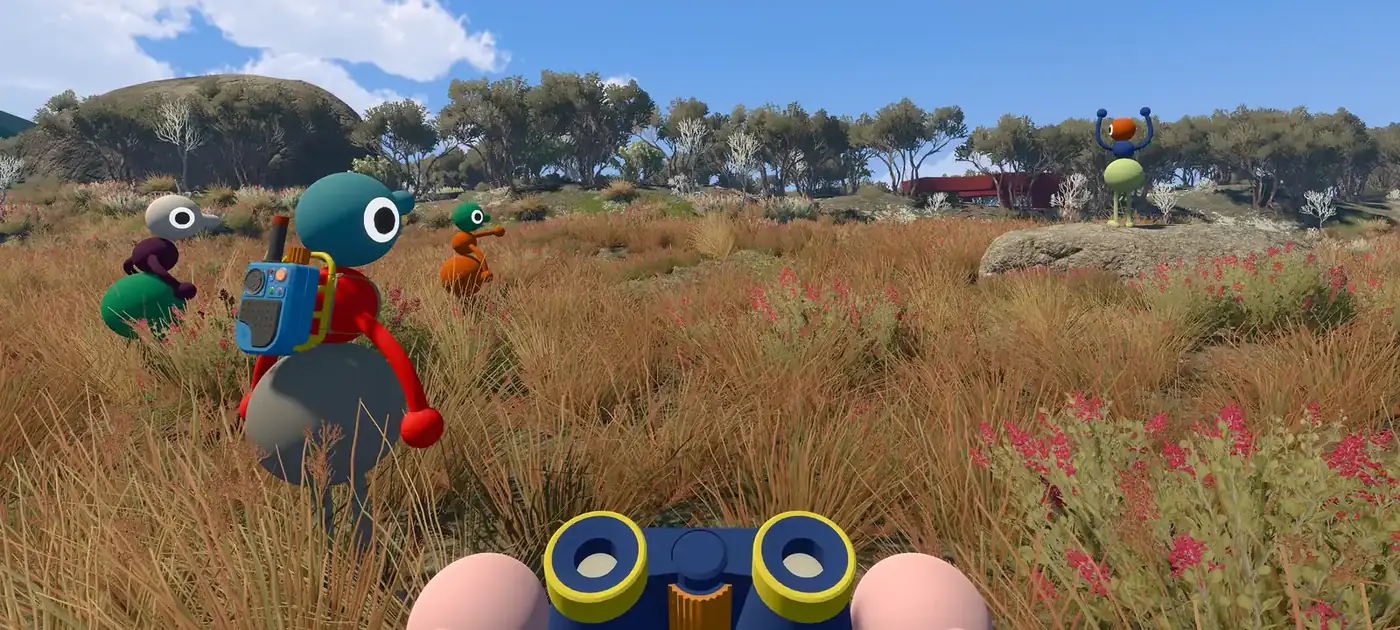
Big Walk puzzle types and what to check first
These categories are a practical index for the search terms around Big Walk puzzles. They describe how to approach a challenge, not a claim that every player will see identical steps.
1. Environment and landmark puzzles
Start with fixed objects: a tower, rail line, tunnel entrance, station, road shape or another landmark that stays understandable when the camera turns. Say what everyone can see from the same place. If a teammate describes a different object, regroup before choosing an interaction.
2. Route-order puzzles
Some puzzles feel difficult because the party has the right locations in the wrong order. Write down the last shared junction, the next observable signal and the return point. The 4166 guide uses this approach for the road, red tower and rail relationship; the 1899 guide uses it for the upper station, moving section and lower station.
3. Audio, microphone and music searches
Similarweb shows search demand for microphone puzzle, music puzzle and headphone puzzle terms. Those labels are useful clues about what players are trying to find, but they are not a universal official checklist. When the challenge is audio-led, confirm voice chat, ask one player to describe the sound and avoid sending the whole group in separate directions based on a guess.
4. Multi-player observation puzzles
Big Walk is designed around cooperation and conversation. Give each player one job: forward observer, return-point reporter, clue recorder or final summarizer. The point is not to split the party permanently; it is to keep one shared reference while a single person checks the next signal.
5. Transport and transition puzzles
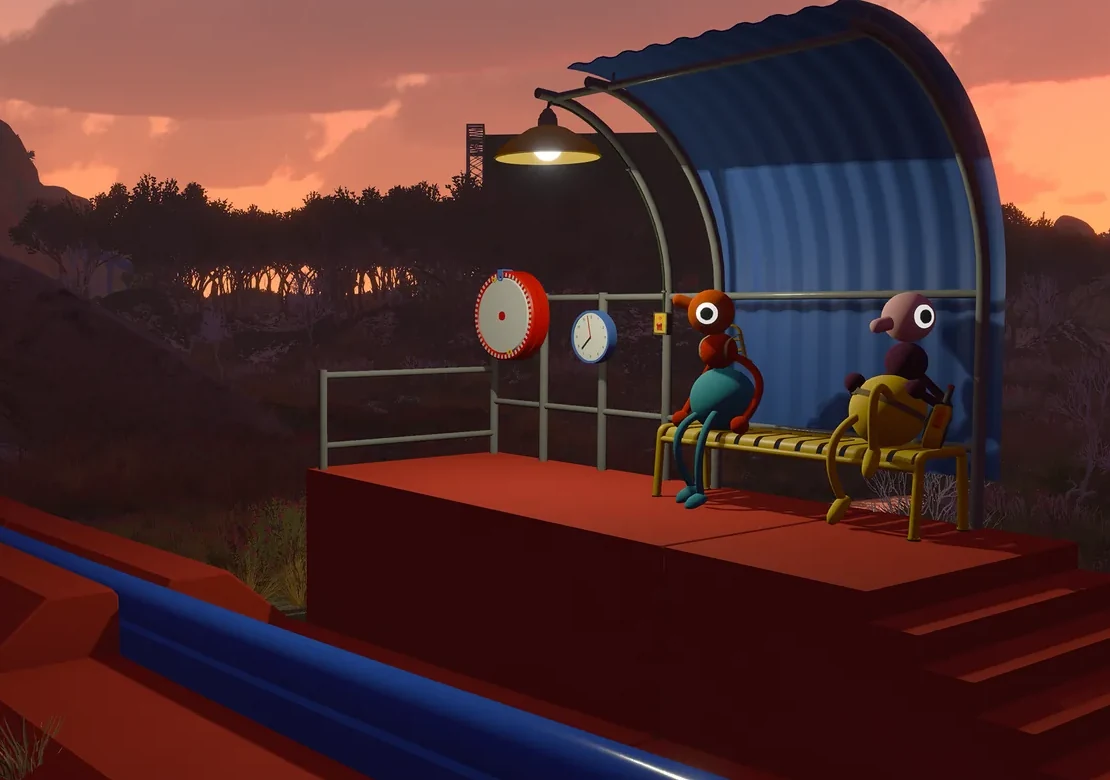
A moving object can be a clue without being the entire answer. In the 1899 section, identify whether the party is at the upper or lower station, then compare the vehicle movement with the ground route. A fixed station makes a safer checkpoint than a moving target.
6. Optional or accessibility-sensitive challenges
The official FAQ documents the ability to skip some challenges when they are inaccessible to a player. Do not treat a skipped challenge as proof that your group missed a secret solution. Record the setting before comparing notes with another party, because two groups may not experience the same obstacle in the same way.
A spoiler-light method for solving Big Walk puzzles
Use this order when you want help without opening a full Big Walk puzzle solution immediately.
- Observe before interactingName the fixed object, sound or movement that everyone can verify. Do not start by guessing the answer.
- Create one shared calloutUse a short name such as red tower, lower station or rail line. Avoid directions that depend on one player's camera angle.
- Test one relationshipCompare the clue with the nearby route, object or return point. Change one variable at a time so the party knows what actually helped.
- Keep a way backLeave one player or one written note anchored to the last confirmed point. This turns a wrong turn into a recoverable experiment.
- Open the full route answer lastIf the group is still stuck, use the 4166 or 1899 guide, then stop reading as soon as the next action is clear. The goal is progress with the amount of spoiler your party chose.
Choose the hint level that matches your spoiler tolerance
The table is an editorial reading guide. It does not replace the game's own challenge settings or promise a universal order for every puzzle.
| Level | What you receive | Best for |
|---|---|---|
| Level 1 · observe | A fixed landmark, sound or relationship to compare. | A group that wants to solve the puzzle itself. |
| Level 2 · order | The next object or route relationship to test, without every action. | A group that has found the area but cannot agree on sequence. |
| Level 3 · route answer | A concrete direction to the relevant 4166 or 1899 section. | A group that has already tried the observation and wants to continue. |
| Full solution | The complete explanation available on a route-specific page when the source and page scope support it. | A party that has explicitly accepted spoilers or is checking a previous run. |
Common questions
Big Walk puzzle FAQ
Sources checked for this puzzle guide
Official pages support the game structure, player-count, challenge-setting and public-media statements. Puzzle categories, spoiler levels and role suggestions are editorial organization; the 4166/1899 route context is linked as third-party reporting and site-specific route notes.